
National Open Scout Group Its Bangladesh Open Scout Group. Is a Non Government Organization In Bangladesh. This Organization Founded By Late Mr. Sahed Alli Bachu in 1980. The World Scout Organization Activities We Want To Be Creating A Better World.
Showing posts with label Girl Scout. Show all posts
Showing posts with label Girl Scout. Show all posts
Monday, 16 July 2018

Monday, 23 January 2017
The World Scout Association

introduction:-
The Scout Association is the largest Scouting organization in the United Kingdom and is the World Organization of the Scout Movement's recognized member for the United Kingdom (UK). Following the origin of Scouting in 1907, the Association was formed in 1910 and incorporated in 1912 by a Royal Charter under its previous name of The Boy Scouts Association.
The Scout Association is the largest National Scout Organization in Europe, representing 35% of the membership of the European Scout Region.
The Scout Association claims to provide activities to (an unedited) 452,000 young people (aged 6–25) in the UK with over 122,000 adult volunteers which is more than one adult for each 4 young people. Its programs include Beaver Scouts (aged 6–8), Cub Scouts (aged 8–10½), Scouts (aged 10½–14), Explorer Scouts (aged 12–18) up to adult Network members (aged 18–25).
The Scout Association aims to provide "fun, adventure and skills for life and give young people the opportunity to enjoy new adventures, experience outdoors and take part in a range of creative, community and international activities, interact with others, make new friends, gain confidence and have the opportunity to reach their full potential.
The Scout Association is led by a Chief Scout, currently the television presenter, adventurer and author Bear Grylls, alongside a UK Chief Commissioner, currently Tim Kidd and Chief Executive, currently Matt Hyde. The Scout Association's president is The Duke of Kent and its Patron is Queen Elizabeth II.
The Scout Association is a member of the National Council for Voluntary Youth Services.
Scout Association Open to all:-
From 1912 to 1967 the organization's name was The Boy Scouts Association and until 1976 only boys were admitted to its programs. In 1976, girls were allowed to join the Venture Scouts section for 16- to 20-year-olds. This expanded to the entire organization in 1991, although the admission of girls was optional and has only been compulsory since 2007. Girls now make up 25% of participants with a total of 94,366 female participants aged between 6 and 25 and a further 50,600 women involved in volunteer roles (being more than 1 adult female for every 2 female young people).2014 Annual Report (Report). The Scout Association. 2014. The Scout Association's activities and adult leadership positions are open to LGBT+ communities.
The Scout Association is open to all faiths with variations to the Scout Promise available to accommodate to those of different religious obligations or national beliefs. Following criticisms of the lack of provision for atheists, in 2012 the Association consulted members about the possibility of creating an additional alternative Promise for those without a religion, and in October 2013, announced that an alternative version of the promise would be available from January 2014 for those without a pronounced faith.
History:-
For the origins of Boy Scouts and the Scout Movement before the formation of The Scout Association see Scouting.
The Boy Scouts Association was formed in 1910, in order to provide a national body in the United Kingdom which could organise and support the rapidly growing number of Scout Patrols and Troops, which had begun to form spontaneously following the publication of Scouting for Boys and The Scout magazine in 1908. It was also the wish of Baden-Powell to wrest control of Scouting from his book's publishers as it was felt the Scout Movement was not given the status it deserved as the publisher C. Arthur Pearson Limited controlled much of Scouting.
1910 to 1920: Growth:-
Originally, Scouting was for boys aged between 11 and 18. However, many girls and younger boys wanted to join in. One group of "Girl Scouts" participated in the 1909 Crystal Palace Rally. Edwardian principles could not accept young girls participating in the rough and tumble, and "wild" activities of the Scouts, and so the Girl Guides were created by Baden-Powell and his sister, Agnes, to provide a more "proper" programme of activities.[18] The solution for younger boys was the creation of the younger Wolf Cubs Section, which was trialed from 1914 and openly launched in 1916. Later, many of those who had grown out of Scouts still wanted to be a part of Scouting resulting in another section, the Rover Scouts, for those over 18 being created in 1918.
Scouting spread throughout the British Empire and wider world. On 4 January 1912, The Boy Scouts Association was incorporated throughout the British Empire by Royal charter for "the purpose of instructing boys of all classes in the principles of discipline loyalty and good citizenship". During the First World War, more than 50,000 Scouts participated in some form of war work on the home front. Scout buglers sounded the "all clear" after air raids, others helped in hospitals and made up aid parcels; Sea Scouts assisted the Coastguard in watching the vulnerable East coast.
The Boy Scouts Association organised the first World Jamboree for Scouts, held in Olympia, London in 1920 together with an international conference for leaders which founded the World Organization of the Scout Movement of which The Boy Scouts Association was a founding member.[18] Baden-Powell continued to guide the Scouts and Girl Guides, going on world tours throughout the rest of his life until ill health caused him to retire to Kenya in 1938 where he died on 8 January 1941.
The Boy Scouts Headquarters Gazette was first published in July 1909, as the official publication of the Association for adult Scouters and administrators, alongside The Scout, a magazine for youth members which had been launched in April 1908.
1920 to 1967:-
In 1929, the Boy Scouts Association hosted the 3rd World Scout Jamboree at Arrowe Park in Cheshire; some 56,000 Scouts from 35 countries attended, making it the largest World Scout Jamboree to date. The first Gang Show, produced by Ralph Reader, opened at the Scala Theatre in London in October 1932. Following the outbreak of World War II, over 50,000 Scouts trained under the National War Service scheme. Tasks undertaken included police messengers and stretcher bearers. The Air Scout branch was launched in January 1941, allowing Scout Troops to specialise in activities related to aircraft and flying. Lord Baden-Powell died in 1941 and was succeeded as Chief Scout by Lord Somers. Starting in 1944, the Scout International Relief Service (SIRS) sent teams of Rover Scouts and Scouters to continental Europe to provide humanitarian aid; ten SIRS teams worked at the recently relieved Bergen-Belsen concentration camp.
After years of trial schemes, the Senior Scout Section was officially launched in 1946, allowing Boy Scouts aged fifteen to eighteen years to form separate patrols or troops, with age appropriate activities and badges. Scouts were prominent in their support of the 1948 Summer Olympics, playing leading roles in the open and closing ceremonies at Wembley Stadium and the sailing events at Torbay.The first Bob a Job Week took place in April 1949, in which Scouts did small tasks for the public in return for a "bob" (5 new pence) to raise funds for the Association and for C. Arthur Pearson's fund for the blind.[30] In the early 1950s, a handful of Boy Scouts were dismissed or marginalized in their Scout Groups due to their involvement with the Young Communist League or related communist activities - the most high profile case being that of Paul Garland from Bristol in 1954 which resulted in a media frenzy and debate in the House of Lords. In 1957, to commemorate fifty years of Scouting and the centenary of Baden-Powell's birth, the Association hosted the 9th World Scout Jamboree at Sutton Park in Birmingham.
1967 to 2001:-
The Boy Scouts Association and its programmers in Britain went largely unchanged until it underwent a major review in the 1960s. The Chief Scouts' Advance Party was formed in 1964 and was sent to survey the organization to see why membership numbers were falling. Their report was published in 1966 and changes were implemented later that year and throughout 1967. As a result, the name of the organization was changed to The Scout Association and major changes were made to the sections and their respective programmers. The youngest section were now named Cub Scouts, the Boy Scout section was renamed simply as the Scout section and the Senior Scouts and Rover Scout section was replaced with Venture Scouts for 16 to 20 year olds. The Scout Uniform was also changed with the inclusion of long trousers for the Scouts, as opposed to the compulsory wearing of knee-length shorts, and the wearing of a Beret instead of the Campaign hat.
The Advance Party Report was not welcomed by all members and a rival report, "A Boy Scout Black Paper", was produced in 1970 by "The Scout Action Group". This provided alternative proposals for the development of the organization and asked for Groups that wished to continue to follow Baden-Powell's original scheme to be permitted to do so. The rejection of these proposals resulted in the formation of the Baden-Powell Scouts' Association.
Several developments were made over the following years, including the introduction of co-educational units of boys and girls, initially restricted to the Venture Scouts section in 1976, but from 1991 junior sections were allowed to become mixed as well.[18] Parents involved in Scouting in Northern Ireland also began to organise activities for their children who were too young for Cub Scouts. Originally, only the leaders of the new section, nicknamed Beavers, were members of the association with the youths themselves becoming Scouts officially in 1986. In the late 1990s, a Muslim Scout Fellowship was formed, which by the end of 2007, had assisted the establishment of 13 Muslim Scout Groups in England and Wales.
Despite these changes, and many other minor ones, Scouting started to fall into a decline through the 1990s with falling membership levels. This spurred a major review into the causes of the decline in 1999.
2001 to 2014:-
Scouting found itself competing for young people's time against many other extracurricular activities and schools themselves which were increasingly venturing into the same types of activities. In addition, adult leaders became concerned with the growing litigation culture in the UK and the negative stereotype as being old fashioned.
To keep up with current trends and appeal to audience new generation, a new uniform, designed by Meg Andrews, was introduced in 2001. The uniform included a variety of bold exciting colours, with the younger sections wearing sweatshirts and activity trousers.
In 2002 the Association launched its new vision towards 2012, which heralded a period of change. Venture Scouting was discontinued and two new sections were introduced: Scout Network for 18–25 year olds, as well as an Explorer Scouts for 14–18 year olds. A new programme was introduced, complete with a new range of badges and awards covering a wider variety of topics such as Public Relations and Information Technology, developing practical and employability skills.
Further changes took place in 2003 when the Association's Adult Training Scheme was relaunched to be more focused and targeted to the volunteers individual role as opposed to the more general training received before.
The Association also began to change in its focus, with a renewed emphasis on outdoor adventure and it now offers over 200 fun and adventurous activities for Scouts, from abseiling and archery while also offering a wider range of development opportunities, from coding to music and drama. In 2004 the Association appointed television presenter Peter Duncan as Chief Scout, who was succeeded by adventurer Bear Grylls in July 2009. The first UK Chief Commissioner, Wayne Bulpitt was appointed on the same day, with a particular remit to support volunteers, grow and develop the movement.
There was criticism of some of these changes, mostly citing problems with the implementation, although several years into the new structure the Explorer Scout and Scout Network sections have become well established[citation needed]. The new badges drew more mixed reactions from several public figures, with some praising The Scout Association for "moving with the times" and others feeling the changes went "against the Scouting ethos of Baden-Powell".
The Scout Association hosted several major events during this time including EuroJam in 2005, hosting 10,000 Scouts and Guides from 40 countries, the 21st World Scout Jamboree in 2007 as well as playing a major role in the centenary celebrations of Scouting that same year, with celebration events organised on Brownsea Island.
By 2010, census figures showed a strong upturn, with The Scout Association in April 2010 claiming the highest rate of growth in UK Scouting since 1972, with total claimed participation reaching just under half a million. In 2014, the Association claimed an increase in youth membership of 100,000 in the ten years since 2004. In 2016 it claimed eleven years of consecutive growth and an increase in female membership, with 25% of participants now female in the 25 years since girls were first welcomed in 1976.
The Association claims one of its biggest challenges is encouraging more adults to volunteer to reduce the number of young people currently on waiting lists (around 40,000). However, by its reported figures (above) it has a high ratio of more than 1 adult volunteer to 4 participant young people (see above), and "young people" includes adults aged 18 to 25. The effort to attract new volunteers received a boost when the Duchess of Cambridge announced her intention to become a volunteer leader for the association with a Scout Group near her Anglesey home. In the decade up to 2014, the number of adult volunteers increased by 14,596 to a total of over 104,000.
2014 to present:-
Scouting for All – a new strategic plan
A new Strategic Plan entitled Scouting for All was launched in 2014 to outline the Association's focus between 2014–2018. It proposed four key areas of activity: Growth, Inclusivity, Youth-Shaped Scouting and Community Impact.
UK Youth Commissioner
In 2014, The Scout Association introduced the role of UK Youth Commissioner. The UK Youth Commissioner works with the national leadership team; The Chief Executive, Chief Scout and UK Chief Commissioner and Chair of the Board of Trustees to contribute to discussions "on behalf of youth members" but how the views of more than 457,000 participant young people are gathered or represented by a selected appointee has not been explained. Hannah Kentish was appointed the first UK Youth Commissioner in October 2014 with Jagz Bharth and Jay Thompson appointed as deputies. Scout Counties and Districts appoint their own Youth Commissioners to ensure that all young people have the opportunity to influence their Scouting adventures.
A Million Hands – community impact
In October 2015, The Scout Association launched a three-year community impact project called "A Million Hands" to mobilise half a million Scouts to support four social issues chosen by their young people. Its aim is to build real and lasting relationships in communities that will enable young people to continue taking "social action" long into the future. The project works in partnership with six key charities; Mind, Alzheimer’s Society, Leonard Cheshire Disability, Guide Dogs, Water Aid and Canal & River Trust to support the four key issues of Dementia, Disability, Mental wellbeing and resilience and Clean water and sanitation.
First woman Chair
In 2015 Dr Ann Limb was appointed Chair of the association, the first woman to hold the post.
Cubs100 – the 2016 centenary of Cub Scouts
Throughout 2016 The Scout Association celebrated the centenary of the Cub Scout section, named Cubs100. Although Cubs began on an experimental basis in 1914, the centenary celebrations marked the launch of the fully developed Wolf Cub programme on 16 December 2016, a date which is regarded as the "official birthday of Cubs". Adventurer Steve Backshall was appointed Cubs100 Ambassador to raise the profile of the anniversary year. [52] A range of events took place throughout 2016, from Adventure Camps to locally organised Promise Parties on 16 December itself, at which Cubs renewed their Promises. One Promise Party in Kings Lynn was attended by the Duchess of Cambridge.
Appointment of new UK Chief Commissioner
In September 2016, Tim Kidd replaced Wayne Bulpitt as the Association's Chief Commissioner.[8] Kidd has been involved in the Scout movement his whole life, starting as a Cub Scout and then as a volunteer, in various leadership roles including Scout Leader, District Commissioner and County Commissioner. In 2016 Kidd received an OBE for services to young people.
Organisation:-
The Scout Association is governed by a Council of between 300 and 500 members in accordance with its various Royal Charters. Membership of the Council of the Scout Association is open to the various officers and national commissioners of the Association, together with members nominated by the Scout Counties including young people aged between 18 and 25, together with additional members elected by the Council itself. The Council elects the Chief Scout who is also the chairman of the Council. Bear Grylls is the current Chief Scout after replacing Peter Duncan in July 2009. The Council also elects the Board of Trustees of the Scout Association (formerly called the Committee of the Council), which manages the business of the Association and makes the policy and rules. A UK Chief Commissioner acts as Deputy Chief Scout and appoints a team of Chief Commissioners and UK Commissioners who are responsible for the Scouting programme in their respective fields. The Board of Trustees maintain a professional Headquarters staff who implement the policy of the Association and provide support and services for the "proper conduct and development of Scouting". The Chief Executive is appointed by the Board to manage the work of the Headquarters staff.
The Chief Scouts
Robert Baden-Powell 1907–1941
Arthur Somers-Cocks 1942–1945
Thomas Corbett 1945–1959
Charles Maclean 1959–1971
William Gladstone 1972–1982
Michael J. H. Walsh 1982–1988
Garth Morrison 1988–1996
George Purdy 1996–2004
Peter Duncan 2004–2009
Bear Grylls 2009–present
The Scout Association is divided into four mainland national groupings: England, Scotland, Wales, and Northern Ireland. While Scouting in England is directly managed by the UK Headquarters, each of the other nations has its own Scout Council and administration.[54] Each of national divisions is further broken up into local Counties for England and Northern Ireland, Areas for Wales, Regions for Scotland and a Balliwick in the case of Guernsey, which generally follow the boundaries of the ceremonial counties of Great Britain. The County/Area/Region can then, in most cases, be broken down further into a number of Scout Districts which usually cover a town, some or all of a city or a section of a larger region such as the New Forest. These districts are themselves made up of several Scout Groups.
The Groups are the local organisations for Scouting, and are the direct descendants of the original Scout Patrols. Groups can consist of one or more Beaver Colonies, Cub Packs, and Scout Troops and may also have one or more Scout Active Support Units, or an Explorer Scout Unit attached to it. Scout Groups only manage the first three sections, with Explorer Scouts and Scout Networks managed by the Scout District. Scout Groups are led by a Group Scout Leader whose main role is handling communication between the local District and the Section Leaders and ensuring the Scout Group meets the minimum standard required by The Scout Association.[citation needed]
At all levels, Scouts are governed by an executive of trustees, known as executive committees – these could be volunteers from the local community who have had ties with Scouting, either themselves or through their children. The executive normally consists of a chairman, secretary, treasurer, and a number of other officers. In Group Executive Committees, Group Scout Leaders and Section Leaders also form part of the committee. Their role is to ensure that the best interests of the young people and the community are served by the Group, District, County, or National organisations.
Beaver Scouts taking part in a Better Prepared project in 2016.
All leaders work as unpaid volunteers, of which there are around 120,000. In addition to this number, the Association employs 198 full-time and part-time staff to support the work of its adult volunteers. Senior volunteers in The Scout Association are called 'Commissioners'. Every County/Area/Region and District is headed by a Commissioner who is responsible for ensuring the Districts/Groups under their jurisdiction meet the standards set by The Scout Association. They receive support from Regional Development Officers in England, who are employed by the Regional Development Service and deployed locally to help support The Scout Association's objectives. Commissioners in the other nations receive support from Field Commissioners, employed and directed differently. District Commissioners report to the County/Area/Regional Commissioner, who in turn report to the UK Chief Commissioner.
 |
National Open Scout Group |
Tuesday, 23 August 2016
First Aid Treatment For Scouting Activity
First Aid Treatment For Scouting Activity

First Aid Treatment - Caring for injured or ill persons until they can receive professional medical care is an important skill for every Scout. With some knowledge of first aid, a Scout can provide immediate care and help to someone who is hurt or who becomes ill. First aid can help prevent infection and serious loss of blood. It could even save a limb or a life.

National Open Scout Group
Early history and warfare -First aid is the assistance given to any person suffering a sudden illness or injury, with care provided to preserve life, prevent the condition from worsening, and/or promote recovery. It includes initial intervention in a serious condition prior to professional medical help being available, such as performing CPR while awaiting an ambulance, as well as the complete treatment of minor conditions, such as applying a plaster to a cut. First aid is generally performed by the layperson, with many people trained in providing basic levels of first aid, and others willing to do so from acquired knowledge. Mental health first aid is an extension of the concept of first aid to cover mental health.

There are many situations which may require first aid, and many countries have legislation, regulation, or guidance which specifies a minimum level of first aid provision in certain circumstances. This can include specific training or equipment to be available in the workplace (such as an Automated External Defibrillator), the provision of specialist first aid cover at public gatherings, or mandatory first aid training within schools. First aid, however, does not necessarily require any particular equipment or prior knowledge, and can involve improvisation with materials available at the time, often by untrained persons.First aid can be performed on all mammals, although this article relates to the care of human patients.

Skills of what is now known as first aid have been recorded throughout history, especially in relation to warfare, where the care of both traumatic and medical cases is required in particularly large numbers. The bandaging of battle wounds is shown on Classical Greek pottery from circa 500 BCE, whilst the parable of the Good Samaritan includes references to binding or dressing wounds.There are numerous references to first aid performed within the Roman army, with a system of first aid supported by surgeons, field ambulances, and hospitals.Roman legions had the specific role of capsarii, who were responsible for first aid such as bandaging, and are the forerunners of the modern combat medic. Further examples occur through history, still mostly related to battle, with examples such as the Knights Hospitaller in the 11th century CE, providing care to pilgrims and knights in the Holy Land.

Formalization of life saving treatments - During the late 18th century, drowning as a cause of death was a major concern amongst the population. In 1767, a society for the preservation of life from accidents in water was started in Amsterdam, and in 1773, physician William Hawes began publicizing the power of artificial respiration as means of resuscitation of those who appeared drowned. This led to the formation, in 1774, of the Society for the Recovery of Persons Apparently Drowned, later the Royal Humane Society, who did much to promote resuscitation.
Napoleon's surgeon, Baron Dominique-Jean Larrey, is credited with creating an ambulance corps (the ambulance volantes), which included medical assistants, tasked to administer first aid in battle.
In 1859 Jean-Henri Dunant witnessed the aftermath of the Battle of Solferino, and his work led to the formation of the Red Cross, with a key stated aim of "aid to sick and wounded soldiers in the field". The Red Cross and Red Crescent are still the largest provider of first aid worldwide.
In 1870, Prussian military surgeon Friedrich von Esmarch introduced formalized first aid to the military, and first coined the term "erste hilfe" (translating to 'first aid'), including training for soldiers in the Franco-Prussian War on care for wounded comrades using pre-learnt bandaging and splinting skills, and making use of the Esmarch bandage which he designed.The bandage was issued as standard to the Prussian combatants, and also included aide-memoire pictures showing common uses.
In 1872, the Order of Saint John of Jerusalem in England changed its focus from hospice care, and set out to start a system of practical medical help, starting with making a grant towards the establishment of Britain's first ambulance service. This was followed by creating its own wheeled transport litter in 1875 (the St John Ambulance), and in 1877 established the St John Ambulance Association (the forerunner of modern-day St John Ambulance) "to train men and women for the benefit of the sick and wounded".
Also in Britain, Surgeon-Major Peter Shepherd had seen the advantages of von Esmarch's new teaching of first aid, and introduced an equivalent programme for the British Army, and so being the first user of "first aid for the injured" in English, disseminating information through a series of lectures. Following this, in 1878, Shepherd and Colonel Francis Duncan took advantage of the newly charitable focus of St John,and established the concept of teaching first aid skills to civilians. The first classes were conducted in the hall of the Presbyterian school in Woolwich (near Woolwich barracks where Shepherd was based) using a comprehensive first aid curriculum.
First aid training began to spread through the British Empire through organisations such as St John, often starting, as in the UK, with high risk activities such as ports and railways.
Aims - The key aims of first aid can be summarised in three key points, sometimes known as 'the three P's':-
1-Preserve life: the overriding aim of all medical care which includes first aid, is to save lives and minimize the threat of death.
2-Prevent further harm: also sometimes called prevent the condition from worsening, or danger of further injury, this covers both external factors, such as moving a patient away from any cause of harm, and applying first aid techniques to prevent worsening of the condition, such as applying pressure to stop a bleed becoming dangerous.
3-Promote recovery: first aid also involves trying to start the recovery process from the illness or injury, and in some cases might involve completing a treatment, such as in the case of applying a plaster to a small wound.
Key skills - Certain skills are considered essential to the provision of first aid and are taught ubiquitously. Particularly the "ABC"s of first aid, which focus on critical life-saving intervention, must be rendered before treatment of less serious injuries. ABC stands for Airway, Breathing, and Circulation. The same mnemonic is used by all emergency health professionals. Attention must first be brought to the airway to ensure it is clear. Obstruction (choking) is a life-threatening emergency. Following evaluation of the airway, a first aid attendant would determine adequacy of breathing and provide rescue breathing if necessary. Assessment of circulation is now not usually carried out for patients who are not breathing, with first aiders now trained to go straight to chest compressions (and thus providing artificial circulation) but pulse checks may be done on less serious patients.
Some organizations add a fourth step of "D" for Deadly bleeding or Defibrillation, while others consider this as part of the Circulation step. Variations on techniques to evaluate and maintain the ABCs depend on the skill level of the first aider. Once the ABCs are secured, first aiders can begin additional treatments, as required. Some organizations teach the same order of priority using the "3Bs": Breathing, Bleeding, and Bones (or "4Bs": Breathing, Bleeding, Burns, and Bones). While the ABCs and 3Bs are taught to be performed sequentially, certain conditions may require the consideration of two steps simultaneously. This includes the provision of both artificial respiration and chest compressions to someone who is not breathing and has no pulse, and the consideration of cervical spine injuries when ensuring an open airway.
Some organizations add a fourth step of "D" for Deadly bleeding or Defibrillation, while others consider this as part of the Circulation step. Variations on techniques to evaluate and maintain the ABCs depend on the skill level of the first aider. Once the ABCs are secured, first aiders can begin additional treatments, as required. Some organizations teach the same order of priority using the "3Bs": Breathing, Bleeding, and Bones (or "4Bs": Breathing, Bleeding, Burns, and Bones). While the ABCs and 3Bs are taught to be performed sequentially, certain conditions may require the consideration of two steps simultaneously. This includes the provision of both artificial respiration and chest compressions to someone who is not breathing and has no pulse, and the consideration of cervical spine injuries when ensuring an open airway.
Preserving life - In order to stay alive, all persons need to have an open airway—a clear passage where air can move in through the mouth or nose through the pharynx and down into the lungs, without obstruction. Conscious people will maintain their own airway automatically, but those who are unconscious (with a GCS of less than 8) may be unable to maintain a patent airway, as the part of the brain which automatically controls breathing in normal situations may not be functioning.
If the patient was breathing, a first aider would normally then place them in the recovery position, with the patient leant over on their side, which also has the effect of clearing the tongue from the pharynx. It also avoids a common cause of death in unconscious patients, which is choking on regurgitated stomach contents.
The airway can also become blocked through a foreign object becoming lodged in the pharynx or larynx, commonly called choking. The first aider will be taught to deal with this through a combination of ‘back slaps’ and ‘abdominal thrusts’.
Once the airway has been opened, the first aider would assess to see if the patient is breathing. If there is no breathing, or the patient is not breathing normally, such as agonal breathing, the first aider would undertake what is probably the most recognized first aid procedure—cardiopulmonary resuscitation or CPR, which involves breathing for the patient, and manually massaging the heart to promote blood flow around the body.
Promoting recovery - The first aider is also likely to be trained in dealing with injuries such as cuts, grazes or bone fracture. They may be able to deal with the situation in its entirety (a small adhesive bandage on a paper cut), or may be required to maintain the condition of something like a broken bone, until the next stage of definitive care (usually an ambulance) arrives.
Training - Basic principles, such as knowing to use an adhesive bandage or applying direct pressure on a bleed, are often acquired passively through life experiences. However, to provide effective, life-saving first aid interventions requires instruction and practical training. This is especially true where it relates to potentially fatal illnesses and injuries, such as those that require cardiopulmonary resuscitation (CPR); these procedures may be invasive, and carry a risk of further injury to the patient and the provider. As with any training, it is more useful if it occurs before an actual emergency, and in many countries, emergency ambulance dispatchers may give basic first aid instructions over the phone while the ambulance is on the way.
Training is generally provided by attending a course, typically leading to certification. Due to regular changes in procedures and protocols, based on updated clinical knowledge, and to maintain skill, attendance at regular refresher courses or re-certification is often necessary. First aid training is often available through community organizations such as the Red Cross and St. John Ambulance, or through commercial providers, who will train people for a fee. This commercial training is most common for training of employees to perform first aid in their workplace. Many community organizations also provide a commercial service, which complements their community programmes.
Training is generally provided by attending a course, typically leading to certification. Due to regular changes in procedures and protocols, based on updated clinical knowledge, and to maintain skill, attendance at regular refresher courses or re-certification is often necessary. First aid training is often available through community organizations such as the Red Cross and St. John Ambulance, or through commercial providers, who will train people for a fee. This commercial training is most common for training of employees to perform first aid in their workplace. Many community organizations also provide a commercial service, which complements their community programmes.
Specific disciplines - There are several types of first aid (and first aider) which require specific additional training. These are usually undertaken to fulfill the demands of the work or activity undertaken.
1-Aquatic/Marine first aid is usually practiced by professionals such as lifeguards, professional mariners or in diver rescue, and covers the specific problems which may be faced after water-based rescue and/or delayed MedEvac.
2-Battlefield first aid takes into account the specific needs of treating wounded combatants and non-combatants during armed conflict.
3-Hyperbaric first aid may be practiced by SCUBA diving professionals, who need to treat conditions such as the bends.
4-Oxygen first aid is the providing of oxygen to casualties who suffer from conditions resulting in hypoxia.
5-Wilderness first aid is the provision of first aid under conditions where the arrival of emergency responders or the evacuation of an injured person may be delayed due to constraints of terrain, weather, and available persons or equipment. It may be necessary to care for an injured person for several hours or days.
5-Mental health first aid is taught independently of physical first aid. How to support someone experiencing a mental health problem or in a crisis situation. Also how to identify the first signs of someone developing mental ill health and guide people towards appropriate help.
First aid services - Some people undertake specific training in order to provide first aid at public or private events, during filming, or other places where people gather. They may be designated as a first aider, or use some other title. This role may be undertaken on a voluntary basis, with an organisation such as the Red Cross, or as paid employment with a medical contractor.
People performing a first aid role, whether in a professional or voluntary capacity, are often expected to have a high level of first aid training.
People performing a first aid role, whether in a professional or voluntary capacity, are often expected to have a high level of first aid training.
First Aid merit badge requirements

Satisfy your counselor that you have current knowledge of all first aid requirements for Tenderfoot rank, Second Class rank, and First Class rank.
Do the following:
a. Explain how you would obtain emergency medical assistance from your home, on a wilderness camping trip, and during an activity on open water.
b. Define the term triage. Explain the steps necessary to assess and handle a medical emergency until help arrives.
c. Explain the standard precautions as applied to bloodborne pathogens.
d. Prepare a first aid kit for your home. Display and discuss its contents with your counselor.
Do the following:
a. Explain what action you should take for someone who shows signals of shock, for someone who shows signals of a heart attack, and for someone who shows signals of stroke.
b. Identify the conditions that must exist before performing CPR on a person. Then demonstrate proper technique in performing CPR using a training device approved by your counselor.
c. Explain the use of an automated external defibrillator (AED).
d. Show the steps that need to be taken for someone suffering from a severe cut on the leg and on the wrist. Tell the dangers in the use of a tourniquet and the conditions under which its use is justified.
e. Explain when a bee sting could be life threatening and what action should be taken for prevention and for first aid.
f. Explain the symptoms of heatstroke and what action needs to be taken for first aid and for prevention.
Do the following:
a. Describe the signals of a broken bone. Show first aid procedures for handling fractures (broken bones), including open (compound) fractures of the forearm, wrist, upper leg, and lower leg using improvised materials.
b. Describe the symptoms and possible complications and demonstrate proper procedures for treating suspected injuries to the head, neck, and back. Explain what measures should be taken to reduce the possibility of further complicating these injuries.
Describe the symptoms, proper first aid procedures, and possible prevention measures for the following conditions:
a. Hypothermia
b. Convulsions / seizures
c. Frostbite
d. Dehydration
e. Bruises, strains, sprains
f. Burns
g. Abdominal pain
h. Broken, chipped, or loosened tooth
i. Knocked out tooth
j. Muscle cramps
Do TWO of the following:
a. If a sick or injured person must be moved, tell how you would determine the best method. Demonstrate this method.
b. With helpers under your supervision, improvise a stretcher and move a presumably unconscious person.
c. With your counselor's approval, arrange a visit with your patrol or troop to an emergency medical facility or through an American Red Cross chapter for a demonstration of how an AED is used.
Teach another Scout a first-aid skill selected by your counselor.
Do the following:
a. Explain how you would obtain emergency medical assistance from your home, on a wilderness camping trip, and during an activity on open water.
b. Define the term triage. Explain the steps necessary to assess and handle a medical emergency until help arrives.
c. Explain the standard precautions as applied to bloodborne pathogens.
d. Prepare a first aid kit for your home. Display and discuss its contents with your counselor.
Do the following:
a. Explain what action you should take for someone who shows signals of shock, for someone who shows signals of a heart attack, and for someone who shows signals of stroke.
b. Identify the conditions that must exist before performing CPR on a person. Then demonstrate proper technique in performing CPR using a training device approved by your counselor.
c. Explain the use of an automated external defibrillator (AED).
d. Show the steps that need to be taken for someone suffering from a severe cut on the leg and on the wrist. Tell the dangers in the use of a tourniquet and the conditions under which its use is justified.
e. Explain when a bee sting could be life threatening and what action should be taken for prevention and for first aid.
f. Explain the symptoms of heatstroke and what action needs to be taken for first aid and for prevention.
Do the following:
a. Describe the signals of a broken bone. Show first aid procedures for handling fractures (broken bones), including open (compound) fractures of the forearm, wrist, upper leg, and lower leg using improvised materials.
b. Describe the symptoms and possible complications and demonstrate proper procedures for treating suspected injuries to the head, neck, and back. Explain what measures should be taken to reduce the possibility of further complicating these injuries.
Describe the symptoms, proper first aid procedures, and possible prevention measures for the following conditions:
a. Hypothermia
b. Convulsions / seizures
c. Frostbite
d. Dehydration
e. Bruises, strains, sprains
f. Burns
g. Abdominal pain
h. Broken, chipped, or loosened tooth
i. Knocked out tooth
j. Muscle cramps
Do TWO of the following:
a. If a sick or injured person must be moved, tell how you would determine the best method. Demonstrate this method.
b. With helpers under your supervision, improvise a stretcher and move a presumably unconscious person.
c. With your counselor's approval, arrange a visit with your patrol or troop to an emergency medical facility or through an American Red Cross chapter for a demonstration of how an AED is used.
Teach another Scout a first-aid skill selected by your counselor.
Tuesday, 12 April 2016

Wednesday, 27 January 2016
Wednesday, 10 June 2015
National Open Scout Group
National Open Scout Group

National Open Scout Group
National Open Scout Group Its Bangladesh Open Scout Group. Is a Non Government Organization In Bangladesh. This Organization is Founded By Late Mr. Sahed Alli Bachu in 1980. The World Scout Organization Activities.
Wednesday, 22 April 2015
Pioneering For Scouting Activity
Documentary Resources of World Scouting
World Organization of The Scout Movement
 |
| Pioneering For World Scouting Activity |
Documentary of Pioneering For Scouting :-
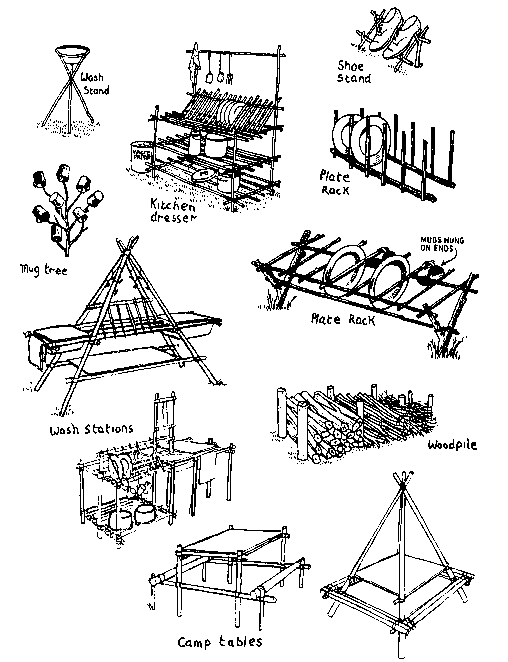
In the Scout Movement, pioneering is the art of using ropes and wooden spars joined by lashings and knots to create a structure. Pioneering can be used for constructing small items such as camp gadgets up to larger structures such as bridges and towers. These may be recreational, decorative, or functional. Pioneering is used to teach practical skills, teamwork and problem solving. It is widely used in Scouting and Girl Guiding. Many Scout and Guide groups train their members in pioneering skills and construct projects, both small and large. In camp, Scouts may construct functional items like tables, camp dressers and gadgets, as well as decorative camp gateways. Pioneering is a common merit badge in many countries, and was required for the Eagle Scout rank in the 1920s and 1930s. The name comes from the 18th and 19th century military engineers who went ahead of an army to "pioneer" a route, which could involve building bridges and towers with rope and timber (for example the Royal Pioneer Corps). Pioneering skills include knot tying (tying ropes together), lashing (tying spars together with rope), whipping (binding the end of a rope with thin twine), splicing (joining or binding the end of a rope using its own fibres), and skills related to the use, care and storage of ropes, spars and related pioneering equipment.
In the Scout Movement, pioneering is the art of using ropes and wooden spars joined by lashings and knots to create a structure. Pioneering can be used for constructing small items such as camp gadgets up to larger structures such as bridges and towers. These may be recreational, decorative, or functional. Pioneering is used to teach practical skills, teamwork and problem solving. It is widely used in Scouting and Girl Guiding. Many Scout and Guide groups train their members in pioneering skills and construct projects, both small and large. In camp, Scouts may construct functional items like tables, camp dressers and gadgets, as well as decorative camp gateways. Pioneering is a common merit badge in many countries, and was required for the Eagle Scout rank in the 1920s and 1930s. The name comes from the 18th and 19th century military engineers who went ahead of an army to "pioneer" a route, which could involve building bridges and towers with rope and timber (for example the Royal Pioneer Corps). Pioneering skills include knot tying (tying ropes together), lashing (tying spars together with rope), whipping (binding the end of a rope with thin twine), splicing (joining or binding the end of a rope using its own fibres), and skills related to the use, care and storage of ropes, spars and related pioneering equipment.
 |
| Pioneering For Scouting Projects |
Basic Knots of Pioneering For Scouting :-
There are a number of basic knots used in pioneering :
• Bowline
 |
| Bowline |
• Clove hitch
 |
| Clove hitch |
 |
| Reef knot |
• Sheet bend
 |
| Sheet bend |
• Timber hitch
 |
| Timber Hitch |
There are also a number of specialized pioneering knots that are used to add safety and functionality to pioneering projects:
• Butterfly Loop
 |
| Butterfly Loop |
• Carrick Bend
 |
| Carrick Bend |
• Rolling hitch
 |
| Rolling hitch |
• Roundturn and Two Half Hitches
 |
| Roundturn and Two Half Hitches |
Basic lashings of Pioneering For Scouting :-
• Square lashing, which gets its name from the fact the wraps are “square” to the poles. Square Lashings bind poles that are in contact and cross each other at
any angle from 45º to 90º
• Diagonal lashing, used when securing two spars when they cross but do not touch as in the "X" of an H-frame trestle
• Round lashing, used to join two poles in a straight line
• Sheer lashing, (also spelled Shear Lashing) used to join two poles in a scissors shape, to be spread out, most often to form the legs of an A-frame.
Pioneering Structures :-
These basic structures are the building blocks for a number of pioneering projects:
• A-Frame: The basis of many tower structures. The horizontal member of the A-frame also makes a convenient springing point for a deck such as a table-top.
• Trestle: Used as a modular element for building bridges and towers. Also used as a 'chariot' for inter-Patrol chariot races. Often referred to as X-Trestle or H-Trestle
• Tripod: As end supports for swingbridges, dining tables, etc. and as the basis for the hourglass tower. A tripod is not considered secure unless its legs connected with cross braces, or are staked or otherwise attached to the ground.
Pioneering Projects :-
• Aerial runways
• Aerial runways
 |
| Aerial runways |
• Ballistae
 |
| Ballistae |
• Benches
 |
| Benches |
• Bridges
 |
| Bridges |
• Camp gadgets
 |
| Camp gadgets |
• Camp gateways
 |
| Camp gateways |
• Catapults
 |
| Catapults |
• Chairs
 |
| Chairs |
• Chippewa Kitchens
 |
| Chippewa Kitchens |
• Dressers
• Ferris Wheel
• Flagpoles
• Merry-Go-Rounds
• Rafts
• See Saws
• Swing Sets
• Swinging Ships
• Tables
• Towers
• Trebuchets
• Flagpoles
• Merry-Go-Rounds
• Rafts
• See Saws
• Swing Sets
• Swinging Ships
• Tables
• Towers
• Trebuchets
Friday, 10 April 2015
Document of The Scout Association
Documentary Resources of World Scouting
World Organization of The Scout Movement
 |
| Document of The Scout Association |
Documentary of The Scout Association :-
The Scout Association is the largest Scouting organization in the United Kingdom and the World Organization of the Scout Movement's recognised member for the United Kingdom. Following the origin of Scouting in 1907, The Scout Association was formed in 1910 and incorporated in 1912 by a royal charter under its previous name of The Boy Scouts Association. The current stated purpose of The Scout Association is to "actively engage and support young people in their personal development, empowering them to make a positive contribution to society". The association achieves this through what it terms the Scout Method and through a youth programme for people aged between 6 and 25. The latest published census shows that over 446,000 young people aged 6 to 25 are members of the association, with a further 40,000 young people waiting to join the organization. It is the largest Scout association in Europe, representing 35% of the membership of the European Scout Region. Girls have been admitted to the association since 1976 when they were first allowed to join the Venture Scouts section for 16 to 20 year-olds. This expanded to the entire organization in 1991; although the decision to admit girls was optional, it has been compulsory since 2007, although religious preferences can be accommodated. According to the latest available census, there are 83,363 female members aged between 6 and 25 and a further 36,565 adult women involved in leadership. The Scout Association is open to all faiths and variations to the Scout Promise are allowed in order to accommodate those of different religious obligations or national allegiances. Following criticisms of the lack of provision for atheists, in 2012 the association consulted members about the possibility of creating an alternative Promise for those without a religion, and in October 2013, announced that an atheist version of the Promise would be available from January 2014. The association is headed by the Chief Scout, currently the adventurer and television presenter Bear Grylls, supported by Chief Commissioner Wayne Bulpitt and Chief Executive Matt Hyde (former Chief Executive of the National Union of Students). The association's president is HRH The Duke of Kent and Her Majesty Queen Elizabeth II is a patron of the organisation.
The Scout Association is the largest Scouting organization in the United Kingdom and the World Organization of the Scout Movement's recognised member for the United Kingdom. Following the origin of Scouting in 1907, The Scout Association was formed in 1910 and incorporated in 1912 by a royal charter under its previous name of The Boy Scouts Association. The current stated purpose of The Scout Association is to "actively engage and support young people in their personal development, empowering them to make a positive contribution to society". The association achieves this through what it terms the Scout Method and through a youth programme for people aged between 6 and 25. The latest published census shows that over 446,000 young people aged 6 to 25 are members of the association, with a further 40,000 young people waiting to join the organization. It is the largest Scout association in Europe, representing 35% of the membership of the European Scout Region. Girls have been admitted to the association since 1976 when they were first allowed to join the Venture Scouts section for 16 to 20 year-olds. This expanded to the entire organization in 1991; although the decision to admit girls was optional, it has been compulsory since 2007, although religious preferences can be accommodated. According to the latest available census, there are 83,363 female members aged between 6 and 25 and a further 36,565 adult women involved in leadership. The Scout Association is open to all faiths and variations to the Scout Promise are allowed in order to accommodate those of different religious obligations or national allegiances. Following criticisms of the lack of provision for atheists, in 2012 the association consulted members about the possibility of creating an alternative Promise for those without a religion, and in October 2013, announced that an atheist version of the Promise would be available from January 2014. The association is headed by the Chief Scout, currently the adventurer and television presenter Bear Grylls, supported by Chief Commissioner Wayne Bulpitt and Chief Executive Matt Hyde (former Chief Executive of the National Union of Students). The association's president is HRH The Duke of Kent and Her Majesty Queen Elizabeth II is a patron of the organisation.

History of The Scout Association :- Formation of The Scout Association,
For the origins of Boy Scouts and the Scout Movement before the formation of The Scout Association see Scouting. The Boy Scouts Association was formed in 1910, in order to provide a national body in the United Kingdom which could organise and support the rapidly growing number of Scout Patrols, which had begun to form spontaneously following the publication of Scouting for Boys in 1908. It was also the wish of Baden-Powell to wrest control of Scouting from his book's publishers as it was felt the Movement was not given the status it deserved as the publishers controlled membership of Scouting.
For the origins of Boy Scouts and the Scout Movement before the formation of The Scout Association see Scouting. The Boy Scouts Association was formed in 1910, in order to provide a national body in the United Kingdom which could organise and support the rapidly growing number of Scout Patrols, which had begun to form spontaneously following the publication of Scouting for Boys in 1908. It was also the wish of Baden-Powell to wrest control of Scouting from his book's publishers as it was felt the Movement was not given the status it deserved as the publishers controlled membership of Scouting.
 |
| Membership Badge of The Boy Scout Association, used prior to 1967 |
1910 to 1920: Growth,
From its foundation, The Boy Scouts Association began noticing a problem. Originally, Scouting was for boys aged between 11 and 18 and many of the boys also had younger brothers who wanted to participate. There were also many girls who wanted the same thing with Baden-Powell famously encountering a group of "Girl Scouts" at the 1909 Crystal Palace Rally. The solution to the first dilemma was the creation of the younger Wolf Cubs Section, which was trialed from 1914 and openly launched in 1916. However, Edwardian principles could not allow young girls to participate in the rough and tumble, and "wild" activities of the Scouts, and so the Girl Guides were created by Baden-Powell's sister, Agnes, to provide a more "proper" programme of activities. Also, many of those who had grown out of Scouts still wanted to be a part of Scouting resulting in another section, the Rover Scouts, for those over 18 being created in 1918. Scouting was now becoming a global phenomenon as it spread throughout the British Empire. A Royal Charter was granted by King George V on 4 January 1912 which incorporated The Boy Scouts Association throughout the British Empire and gave it "the purpose of instructing boys of all classes in the principles of discipline loyalty and good citizenship". During the First World War, more than 50,000 Scouts participated in some form of war work on the home front. Scout buglers sounded the "all clear" after air raids, others helped in hospitals and made up aid parcels; Sea Scouts assisted the Coastguard in watching the vulnerable East coast. The Boy Scouts Association organised the first World Jamboree for Scouts, held in Olympia, London in 1920 together with an international conference for leaders which founded the World Organization of the Scout Movement of which The Boy Scouts Association was a founding member. Baden-Powell continued to guide the Scouts and Girl Guides, going on world tours throughout the rest of his life until ill health caused him to retire to Kenya in 1938 where he passed away on 8 January 1941. The Headquarters Gazette was first published in July 1909, as the official publication of the Association for adult Scouters and administrators, alongside The Scout, a magazine for youth members which had been launched in April 1908.
1920 to 1967,
In 1929, the Boy Scouts Association hosted the 3rd World Scout Jamboree at Arrowe Park in Cheshire; some 56,000 Scouts from 35 countries attended, making it the largest World Scout Jamboree to date. The first Gang Show, produced by Ralph Reader, opened at the Scala Theatre in London in October 1932. Following the outbreak of World War II, over 50,000 Scouts trained under the National War Service scheme. Tasks undertaken included police messengers and stretcher bearers. The Air Scout branch was launched in January 1941, allowing Scout Troops to specialise in activities related to aircraft and flying. Lord Baden-Powell died in 1941 and was succeeded as Chief Scout by Lord Somers. Starting in 1944, the Scout International Relief Service (SIRS) sent teams of Rover Scouts and Scouters to continental Europe to provide humanitarian aid; ten SIRS teams worked at the recently relieved Bergen-Belsen concentration camp. After years of trial schemes, the Senior Scout Section was officially launched in 1946, allowing Boy Scouts aged fifteen to eighteen years to form separate patrols or troops, with age appropriate activities and badges. Scouts were prominent in their support of the 1948 Summer Olympics, playing leading roles in the open and closing ceremonies at Wembley Stadium and the sailing events at Torbay. The first Bob a Job Week was in April 1949, in which Scouts did small tasks for the public in return for a "bob" (5 new pence) to raise funds for the Association and for "starving Europe". In 1957, to commemorate fifty years of Scouting and the centenary of Baden-Powell's birth, the Association hosted the 9th World Scout Jamboree at Sutton Park in Birmingham.
 |
| Membership Badge of The Scout Association Between 1967 and 2003 |
1967 to 2001,
The Boy Scouts Association and its programmes in Britain went largely unchanged until it underwent a major review in the 1960s. The Chief Scouts' Advance Party was formed in 1964 and was sent to survey the organization to see why membership numbers were falling. Their report was published in 1966 and changes were implemented later that year and throughout 1967. As a result, the name of the organisation was changed to The Scout Association and major changes were made to the sections and their respective programmes. The youngest section were now named Cub Scouts, the Boy Scout section was renamed simply as the Scout section and the Senior Scouts and Rover Scout section was replaced with Venture Scouts for 16 to 20 year olds. The Scout Uniform was also changed with the inclusion of long trousers for the Scouts, as opposed to the compulsory wearing of knee-length shorts, and the wearing of a Beret instead of the Campaign hat. The Advance Party Report was not welcomed by all members and a rival report, "A Boy Scout Black Paper", was produced in 1970 by "The Scout Action Group". This provided alternative proposals for the development of the organization and asked for Groups that wished to continue to follow Baden-Powell's original scheme to be permitted to do so. The rejection of these proposals resulted in the formation of the Baden-Powell Scouts' Association. Several developments were made over the following years, including the introduction of co-educational units of boys and girls, initially restricted to the Venture Scouts section in 1976, but from 1991 junior sections were allowed to become mixed as well. Parents involved in Scouting in Northern Ireland also began to organise activities for their children who were too young for Cub Scouts. Originally, only the leaders of the new section, nicknamed Beavers, were members of the association with the youths themselves becoming scouts officially in 1986. In the late 1990s, a Muslim Scout Fellowship was formed, which by the end of 2007, had assisted the establishment of 13 Muslim Scout Groups in England and Wales. Despite these changes, and many other minor ones, Scouting started to fall into a decline through the 1990s with falling membership levels. This spurred a major review into the causes of the decline in 1999.
The Boy Scouts Association and its programmes in Britain went largely unchanged until it underwent a major review in the 1960s. The Chief Scouts' Advance Party was formed in 1964 and was sent to survey the organization to see why membership numbers were falling. Their report was published in 1966 and changes were implemented later that year and throughout 1967. As a result, the name of the organisation was changed to The Scout Association and major changes were made to the sections and their respective programmes. The youngest section were now named Cub Scouts, the Boy Scout section was renamed simply as the Scout section and the Senior Scouts and Rover Scout section was replaced with Venture Scouts for 16 to 20 year olds. The Scout Uniform was also changed with the inclusion of long trousers for the Scouts, as opposed to the compulsory wearing of knee-length shorts, and the wearing of a Beret instead of the Campaign hat. The Advance Party Report was not welcomed by all members and a rival report, "A Boy Scout Black Paper", was produced in 1970 by "The Scout Action Group". This provided alternative proposals for the development of the organization and asked for Groups that wished to continue to follow Baden-Powell's original scheme to be permitted to do so. The rejection of these proposals resulted in the formation of the Baden-Powell Scouts' Association. Several developments were made over the following years, including the introduction of co-educational units of boys and girls, initially restricted to the Venture Scouts section in 1976, but from 1991 junior sections were allowed to become mixed as well. Parents involved in Scouting in Northern Ireland also began to organise activities for their children who were too young for Cub Scouts. Originally, only the leaders of the new section, nicknamed Beavers, were members of the association with the youths themselves becoming scouts officially in 1986. In the late 1990s, a Muslim Scout Fellowship was formed, which by the end of 2007, had assisted the establishment of 13 Muslim Scout Groups in England and Wales. Despite these changes, and many other minor ones, Scouting started to fall into a decline through the 1990s with falling membership levels. This spurred a major review into the causes of the decline in 1999.
2001 to Present,
Scouting found itself competing for young people's time against many other extracurricular activities and schools themselves which were increasingly venturing into the same types of activities. In addition, adult leaders became concerned with the growing litigation culture in the UK and the negative stereotype as being old fashioned. Various changes occurred in quick succession following the new millennium. A new uniform, designed by Meg Andrews, was introduced in 2001 that was more modern and practical, with younger sections now wearing sweatshirts and with the shirts now in brighter colours complete with activity trousers. The following year, the association launched their new vision towards 2012 alongside a new youth programme. Changes included the replacement of the Venture Scouts with Explorer Scouts and the Scout Network, for members aged between 14 and 18 and 18 and 25 respectively, and the introduction of a new awards and badge scheme complete with new badges on topics covering more adventurous activities and modern skills including IT and PR. A further change occurred in 2003 when Adult Training was relaunched to be more focused and targeted to the volunteers individual role as opposed to the more general training received before. There was criticism of some of these changes, mostly citing problems with the implementation, although several years into the new structure the Explorer Scout and Scout Network sections have become well established. The new badges drew more mixed reactions from several public figures, with some praising The Scout Association for "moving with the times" and others feeling the changes went "against the Scouting ethos of Baden-Powell". The organization also began to change in its focus, with it being claimed it was becoming more connected with young people and emphasising the adventure and the approximately 200 activities that can be run within a scouting programme. This was seen through publicity materials, the relaunch of national Scout Activity Centres and through the appointments of Chief Scouts Peter Duncan and Bear Grylls in 2004 and 2009 respectively. Census figures for the last few years show an upturn in membership, with The Scout Association in April 2010 announcing the highest rate of growth in British Scouting since 1972, with total membership reaching just under half a million. In 2014, the Association was able to report an increase in youth membership of 100,000 in the ten years since 2004. The Scout Association also hosted many major events during this time including EuroJam in 2005, hosting 10,000 scouts and guides from 40 countries, the 21st World Scout Jamboree in 2007 as well as playing a major role in the centenary celebrations of Scouting that same year, with celebration events organised on Brownsea Island. One of the association's largest current problems is encouraging more adults to volunteer with the scouts to reduce the number of youths currently on waiting lists. This aim was helped when in 2012, the Duchess of Cambridge announced her intention to become a volunteer leader for the association with a group near her Anglesey home. In the decade up to 2014, the number of adult volunteers increased by 14,596 to a total of over 104,000.
Organisation of The Scout Association :-
The Chief Scouts o Robert Baden-Powell 1907–1941
o Arthur Somers-Cocks 1942–1945
o Thomas Corbett 1945–1959
o Charles Maclean 1959–1971
o William Gladstone 1972–1982
o Michael J. H. Walsh 1982–1988
o Garth Morrison 1988–1996
o George Purdy 1996–2004
o Peter Duncan 2004–2009
o Bear Grylls 2009–Present
The Chief Scout is the leader of The Scout Association, and is responsible for determining the direction and policies of Scouting in the United Kingdom of Great Britain and Northern Ireland and Crown Overseas Territories. Bear Grylls is the current Chief Scout after replacing Peter Duncan in July 2009. There is a team of Commissioners who are responsible for the Scouting programme in their respective divisions. The Scout Association is divided into four mainland national groupings: England, Scotland, Wales, and Northern Ireland. Each of these divisions is further broken up into local Counties for England and Northern Ireland, Areas for Wales, Regions for Scotland and a Balliwick in the case of Guernsey, which generally follow the boundaries of the ceremonial counties of Great Britain. The County/Area/Region can then, in most cases, be broken down further into a number of Scout Districts which usually cover a town, some or all of a city or a section of a larger region such as the New Forest. These districts are themselves made up of several Scout Groups. The Groups are the local organisations for Scouting, and are the direct descendants of the original Scout Patrols. Groups can consist of one or more Beaver Colonies, Cub Packs, and Scout Troops and may also have one or more Scout Active Support Units, or an Explorer Scout Unit attached to it. Scout Groups only manage the first three sections, with Explorer Scouts managed by the Scout District and Scout Networks, including those run within a district, controlled from the County or equivalent. Scout Groups are led by a Group Scout Leader whose main role is handling communication between the local District and the Section Leaders and ensuring the Scout Group meets the minimum standard required by The Scout Association. At all levels, Scouts are governed by an executive of trustees, known as executive committees these could be volunteers from the local community who have had ties with Scouting, either themselves or through their children. The executive normally consists of a chairman, secretary, treasurer, and a number of other officers. In Group Executive Committees, Group Scout Leaders and Section Leaders also form part of the committee. Their role is to ensure that the best interests of the young people and the community are served by the Group, District, County, or National organisations. All leaders work as unpaid volunteers, of which there are around 120,000. In addition to this number, the Association employs 198 full-time and part-time staff to support the work of its adult volunteers. Senior volunteers in The Scout Association are called 'Commissioners'. Every County/Area/Region and District is headed by a Commissioner who is responsible for ensuring the Districts/Groups under their jurisdiction meet the standards set by The Scout Association. They receive support from Regional Development Officers in England, who are employed by the Regional Development Service and deployed locally to help support The Scout Association's objectives. Commissioners in the other nations receive support from Field Commissioners, employed and directed differently. District Commissioners report to the County/Area/Regional Commissioner, who in turn report to the UK Chief Commissioner.
Sections of The Scout Association :-
In the Scout Association, there are five sections to cater for youth aged between 6 and 25 years of age.
The first four sections (Beavers to Explorers) are led by a Section Leader and aided by Assistant Leaders, Sectional Assistants, Occasional Helpers and Young Leaders, who are Explorer Scouts trained in leadership techniques. Scout Networks are mainly member led, but are assisted by a Network Leader who ensures that the Network is working within the rules of the association. In addition to adult leadership, the association encourages its members themselves to take on positions of responsibility for their section meetings. This can be through responsibility for a group of members, such as the Patrol Leader and Assistant Patrol Leader in Scouts and Sixers and Seconders in Cubs, or through sectional forums to feedback on programmes. The Scout section also have the role of Senior Patrol Leader, usually someone about to move on to Explorers who overlooks all the patrols, and the members of the Explorer section are openly encouraged to run evenings and to plan their own meetings.
Air and Sea Scouts of The Scout Association :-
Some Scout Groups belong to separate branches of the scouting programme called Air Scouts and Sea Scouts. Both branches follow the core programme in all Sections but can add more aeronautical or nautical emphasis depending on the branch, with some Group branches choosing to be recognised by the Royal Air Force or Royal Navy. In the United Kingdom there are approximately 400 Sea Scout Groups, of which about 25% (101 Groups) are Royal Navy recognised, whilst of 117 Air Scout Groups, 43 are recognised by the RAF.
Adult ranks :-
There are a variety of different positions, ranks and roles that exist for adults. The highest roles in the association are the honorary positions of Patron and President which is taken by the Head of State and a member of the Royal Family respectively, currently Queen Elizabeth II and The Duke of Kent. Below these are the members of UK Headquarters including the Chief Scout, who is honorary head of Scouting in the UK and the public face of scouting, and the UK Chief Commissioner, who is in charge of the volunteers in the organization and of the other commissioners. Below these are the Commissioners for the Nations, Regions, Counties, Areas and Districts all of whom are assisted by deputies and assistant commissioners who can oversee and advise on a particular area of responsibility - for example an Assistant District Commissioner for Beaver Scouts particularly ensures that that section in the district is abiding to the Scout Association's rules. The final managerial role in the organization is that of the Group Scout Leader and their Assistant, who are both in charge of a local scout group. All of these roles are uniformed and for those volunteer roles from County level downwards training is required in the basic values of Scouting, safety and child protection, inclusion and advanced managerial skills to achieve their Wood Badge. At the local sectional level, a section is run by a Scout Leader, who is in overall charge of the section, and by Assistant Scout Leaders, who assist the Leader in their role. These roles are uniformed and also require training to achieve their Wood Badge, although their training content consists of the basic values of Scouting, safety and child protection, inclusion, camping and scout skills and administration. They are also required to complete First Aid every three years. Below leaders are the uniformed role of Sectional Assistant and the non-uniformed role of Occasional Helper. The Sectional Assistant has to complete basic training consisting of the values of scouting, safety and child protection only while an occasional helper is a non-uniformed role and requires only to have a criminal records check by the Disclosure and Barring Service. In addition, there are Young Leaders who must complete training in child protection and safety and then have the option to complete further modules on topics that mirror the adult training programme. Adults can also become members of Scout Active Support Units that provide a variety of services to Scouting at Group, District or County/Area level. These units allow adults to support Scouting activities without having the full-time commitment of a leadership role.
Progressive award scheme :-
Throughout all the sections in scouting, a progressive award scheme operates which forms a major part of the scout programme and promotes a consistent commitment to the scout programme. There are six awards as part of the scheme, five of which are Chief Scout's awards and culminate in the Queen's Scout award (King's Scout prior to 1953).
Throughout all the sections in scouting, a progressive award scheme operates which forms a major part of the scout programme and promotes a consistent commitment to the scout programme. There are six awards as part of the scheme, five of which are Chief Scout's awards and culminate in the Queen's Scout award (King's Scout prior to 1953).
 |
| The Queen's Scout Award Badge |
The first three awards, the Chief Scout's Bronze, Silver and Gold award, are the highest possible awards achievable in Beavers, Cubs and Scouts respectively. To achieve these awards, a number of challenge badges must be previously obtained, demonstrating a wide range of skills, in addition to a personal challenge. The final three awards, The Chief Scout's Platinum, Diamond and the Queen's Scout award are all available in the Explorer Scout and Scout Network sections alone. The awards mirror the requirements of The Duke of Edinburgh's Award at Bronze, Silver and Gold level respectively, consisting of a period of time volunteering in the local community, a prolonged physical activity, the advancement of a skill and the partaking of an expedition, allowing a participant to partake in both the DofE and the award at the same time. In addition, these three awards do not have to be completed in order, and participants can skip straight to a specific award, although additional work is involved. Achieving the Queen's Scout award is seen as a significant event on a national scale; recipients of the award are invited to join the St George's Day service at Windsor Castle the year after completing the scheme, and parade before The Queen. The progressive award scheme was developed from original awards and classifications used since the origin of scouting in 1907. These lay with the award of 'First' and 'Second' class standards within the different sections, and with the creation of the King's Scout award. These awards focused on the values of service and basic scouting skills. Following a review in the 1960s, the class standards were dropped and replaced in Cubs by arrow awards and in Scouts by the 'Scout Standard', 'Advanced Scout Standard', and the 'Chief Scout Award'; meanwhile the renamed 'Queen's Scout' award was changed to focus on long-term service and commitment as well as the completion of an expedition lasting four days and fifty miles. Further changes occurred a few decades later. The Cub arrows were replaced in 1990 with the 'Cub Scout Award', 'Adventure Award' and 'Adventure Crest' award, while the Scout Standards were replaced in 1983 with the 'Scout Award', 'Pathfinder Award', and 'Explorer Award' - the Chief Scout's Award remained the highest award for the Scout Section. The 'Venture Scout Award' was also created for the senior section as an intermediary stage to the Queen's Scout Award, as were additional awards for Beaver Scouts. All these awards were abolished or changed following the introduction of the current 6-25 programme in February 2002.
Promise and Law :-
The Scout Promise is made by all members of The Scout Association from the Scout section upwards, including Leaders:
The Scout Promise is made by all members of The Scout Association from the Scout section upwards, including Leaders:
On my honour, I promise that I will do my best,
To do my duty to God and to the Queen,
To help other people,
And to keep the Scout Law.
Additional variations of the promise are used for different faiths or for members from other countries, whose allegiance is pledged to the country and not the monarch. For the two younger sections, a simpler promise is used:
Cub Scouts utilise the normal promise with the omission of the opening 'On my honour' and a change in the final line "to keep the Cub Scout Law", while beaver scouts use a different promise altogether:
I promise to do my best,
To be kind and helpful,
And to love God.
In addition to the promise, there is a Scout Law which dictates what qualities a scout should hold. The Scout Law is as follows:
1. A Scout is to be trusted.
2. A Scout is loyal.
3. A Scout is friendly and considerate.
4. A Scout belongs to the world-wide family of Scouts.
5. A Scout has courage in all difficulties.
6. A Scout makes good use of time and is careful of possessions and property.
7. A Scout has self-respect and respect for others.
This law is used for all sections except Cubs and Beavers. Beaver Scouts have no law, as these values are to be demonstrated through the meetings themselves. The Cub Scout law is different again:
Cub scouts always do their best,
think of others before themselves
and do a good turn every day.
The motto of the Scout Association, and of scouting as a whole, is 'Be Prepared'. These were explained in the original Scouting books and was expanded in a series of promotional posters for the sections in the early 2000s.
 |
| Scouting for Boys |
Variations of the Promise :-
There are permitted variations to accommodate those whose faith or national allegiance give rise to problems with the wording of the "core" Scout Promise. The Scout Association expects that the phrases "...duty to God‟ and "...to love God" will suitable for most faiths "including Christians, Hindus, Jews, Muslims and Sikhs". Muslims who have difficulty with the phrase "On my honour" because of the Islamic proscription of swearing oaths, are able to say "In the name of Allah, the Most Beneficent the Most Merciful…" instead if they prefer. Also, "...duty to Allah and to the Queen" may be used. Hindus and Buddhists may promise "...duty to my Dharma". Foreign nationals resident in the United Kingdom are able to promise to do their "...duty to God and to the country in which I am now living", although British subjects must include the Queen in their promise. In 2012 the Scout Association reviewed its fundamentals and launched a consultation to ask its members whether an alternative version of the Scout Promise should be developed for atheists and those unable to make the existing commitment. In 2013 it was announced that the consultation had led to the addition of an alternative promise for humanists and atheists. Taking effect on January 1, 2014, members can choose to replace "duty to God" with "to uphold our Scout values". The change has been welcomed by representatives of the Church of England, the Roman Catholic Church, the Free Churches Group and the British Humanist Association. The alternative promise takes the following form:
On my honour, I promise that I will do my best,
To uphold our Scout values, to do my duty to the Queen,
To help other people,
And to keep the Scout Law.
Subscribe to:
Posts (Atom)